
How do porta potties work?
Think of it as a self-contained holding system. The base is the tank, sized 60 to 70 gallons on a standard porta potty rental, and it sits under a molded seat with a foot-pump or hand-sanitizer dispenser next to it. There's no plumbing. A deodorizing chemical breaks down waste and knocks back odor between visits. The whole unit measures about 44 by 48 inches on the ground and stands roughly 92 inches tall, so it fits in tight side yards or job site corners without much fuss. ANSI/PSAI Z4.3, the portable sanitation service standard, sets one service visit per week as the baseline for up to 10 users over a 40 hour week, which is why Overland Park Porta Pros builds pumping schedules around actual headcount, not guesswork. Heavier use on a construction crew or a weekend festival means more frequent service, which is where a porta potty rental cost quote starts to shift. For most home projects, a porta john rental on a weekly cadence covers it.
How do flushable porta potties work?
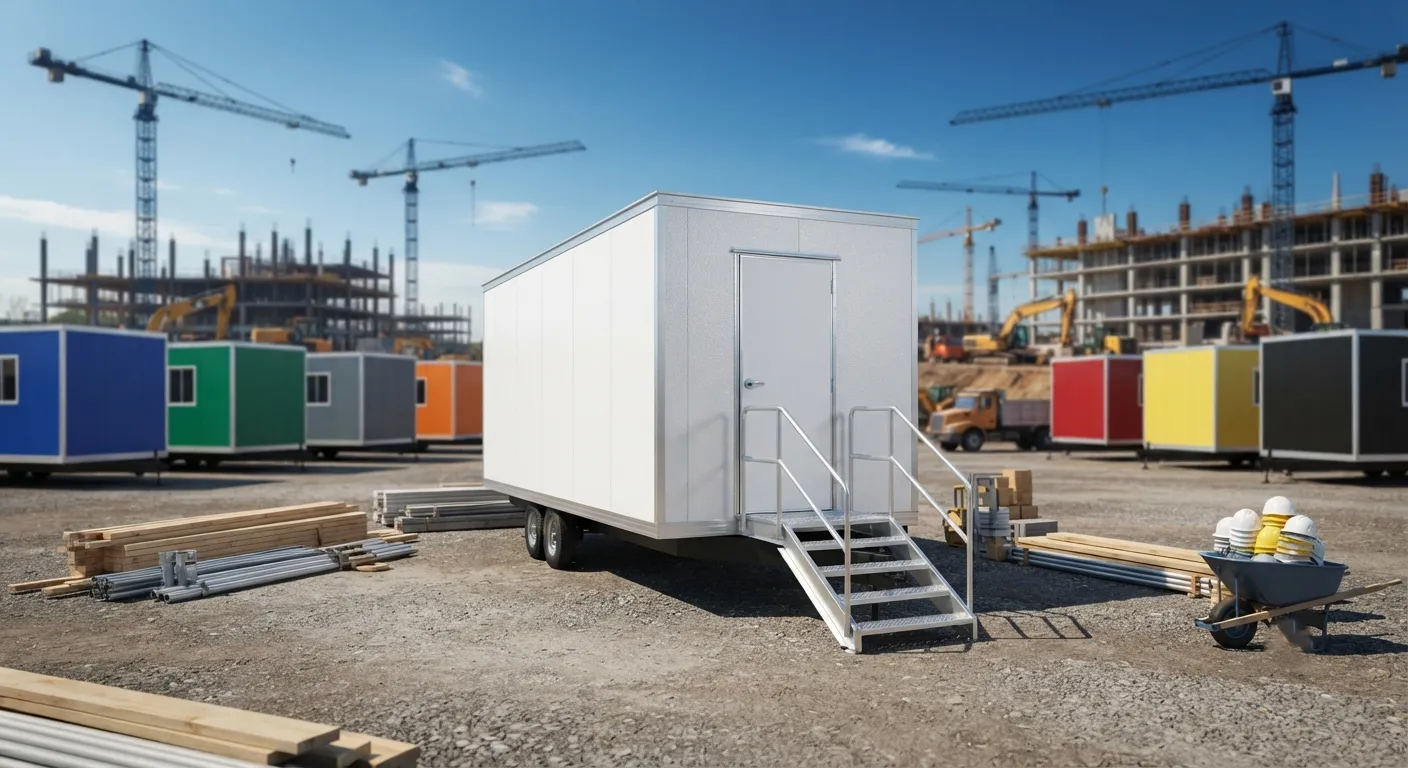
A deluxe or flushable unit uses a small onboard freshwater tank and a foot-pedal or hand-lever flush that pushes water into the bowl, rinsing waste into the holding tank below, similar to a boat toilet. There's a sink too, often fed by the same freshwater reservoir, which is closer to what people expect walking into a real bathroom. A deluxe flushable porta potty makes sense for weddings, corporate events, or any job where guests aren't construction crews clocking in and out. Restroom trailers take this further. A restroom trailer rental runs on a pressurized water system with real flush toilets, sometimes climate control, and multiple stalls, like the 2 stall restroom trailer or the larger 8 stall restroom trailer for bigger crowds. If you need washing without a full trailer, an ADA-compliant unit built to ADA Standards section 213.2 requires that when single-user units are clustered, at least 5 percent, and never fewer than one, be wheelchair accessible with a 60 inch turning circle per ADA Standards section 304.3.1.
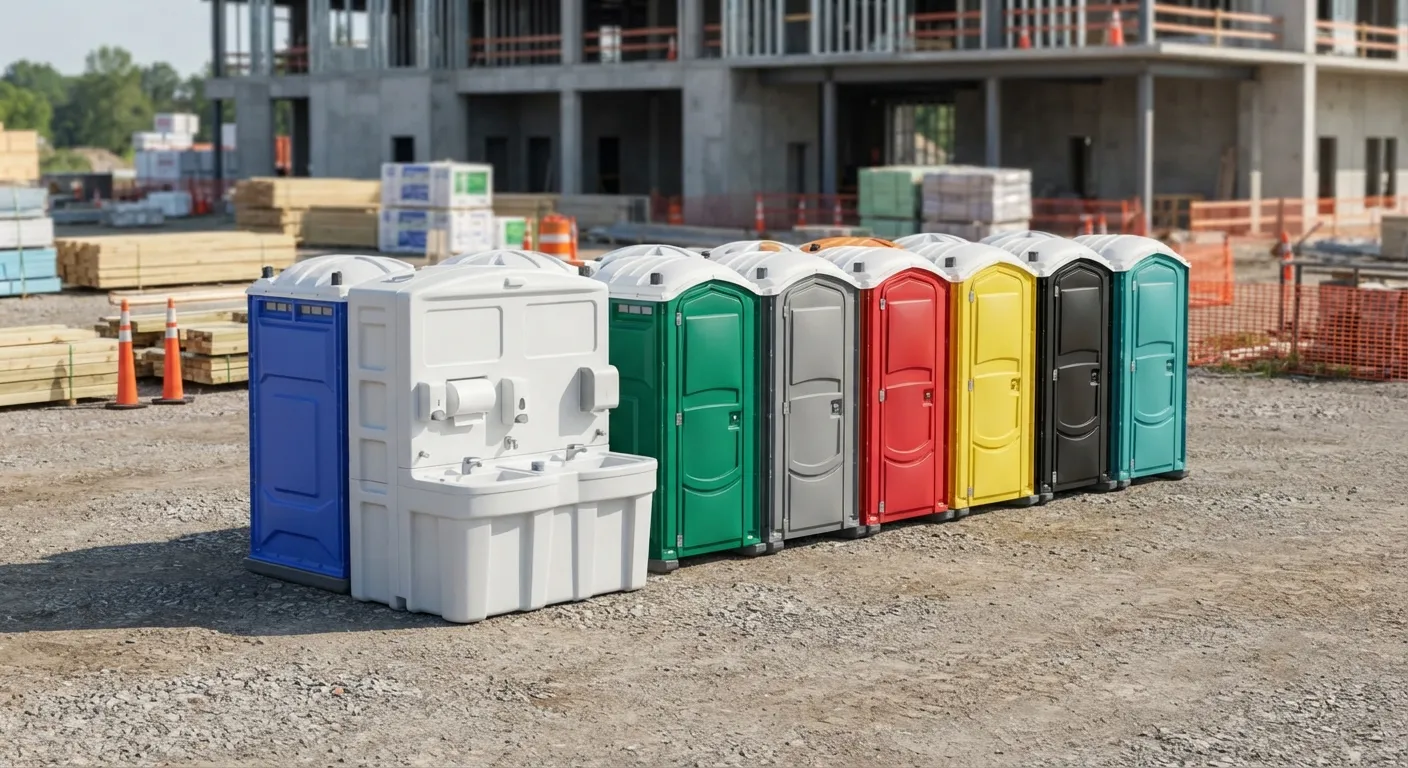
How does a portable sink work?
A portable sink is its own sealed system: a freshwater tank up top, a foot pump or lever that pushes water through the faucet, and a gray water tank underneath that catches the runoff. No hose, no drain line. Some units heat the water, some run cold-only, but either way soap and towels matter more than people think. 29 CFR 1910.141(d)(2) is explicit that washing facilities need soap and towels or a hand-drying device, and hand sanitizer alone does not satisfy it. A handwashing station rental or standalone portable sink rental covers that requirement on a job site or at a food vendor booth. Where the work involves paints, coatings, herbicides or insecticides, OSHA 1926.51(f)(1) requires washing facilities specifically because of those contaminants, not general handwashing. Pair one with a hand sanitizer station rental for extra coverage during high-traffic hours, and check handwashing station requirements if you're planning for an inspection.
Do porta potties smell, and how does service prevent it?
Every unit smells a little between services; that's the chemical doing its job breaking down waste, not a sign something's wrong. What keeps it under control is the pump-and-refill cycle: a service truck vacuums the tank, rinses it, and refills the chemical reservoir on schedule. How often are porta potties cleaned covers typical intervals in more depth, and do porta potties smell walks through what's normal versus what needs a call. On a busy construction site in Overland Park, a crew running dozens of workers needs enough units to keep pace, calculated per OSHA 1926.51(c), which sets 1 toilet for 20 workers or fewer and scales up from there. That's the standard construction site services teams plan around, and it's covered in detail on OSHA portable toilet requirements. Camping trips work differently: a camping porta potty sees lighter, spread-out use, so service intervals stretch longer than a job site where a construction worker running to a porta-potty on a lunch break is normal traffic.
Septic tank cleaning chemicals are a different animal from what's in a rental unit. A residential septic tank typically gets pumped every 3 to 5 years depending on tank size and household size, and that's a job for septic pumping service, not a portable toilet route truck. If you're weighing a septic tank pumping cost against renting a holding tank rental during a repair, both are worth pricing out. For Overland Park homeowners near Leawood, about 5.7 miles east, or Merriam, 11.1 miles north, service areas covers what's available close by.
How much does a standard rental cost per day versus per month?
| unit | day | week | month |
|---|---|---|---|
| standard | $100-$350 | $130-$500 | $125-$325 |
Daily rentals run cheaper up front but add up fast on longer jobs. Check porta potty rental per day or monthly porta potty rental for the full breakdown.
Can I place a porta potty on the street in Overland Park?
Placement in the public right of way needs confirming with the city before delivery day. See porta potty permit requirements and porta potty placement guide for planning details.
How many porta potties does my job site need?
It depends on crew size and shift length. OSHA 1926.51(c) sets the baseline ratio, and how many porta potties do i need walks through the math for different worker counts.
Do flushable units need a water hookup?
No. Flushable and deluxe units carry their own onboard freshwater tank, so they work anywhere a standard unit does. See deluxe flushable porta potty for specs.
What happens to porta potties in winter?
Cold weather changes chemical performance and freeze risk. Porta potty in winter covers what Overland Park Porta Pros does differently during cold months.
Next step
Get a delivery date
Tell us the address, the dates and the headcount. We size the order and confirm the route.