
What Does OSHA Require for Farm Sanitation?
OSHA 1928.110 covers hand-labor agricultural operations directly: potable water, toilets and handwashing, at a ratio of one facility per 20 employees, reachable within a quarter mile walk from wherever the crew is working. That is a tighter placement rule than a lot of farm operators expect, and it means one standard porta potty rental parked at the barn does not satisfy the standard if your crew is thinning beans a half mile out. You move the unit as the work moves, or you place more than one. Overland Park operations spread across multiple fields usually need at least two units in rotation rather than one fixed spot. Water matters too. OSHA 1926.51(a)(1) requires an adequate supply of potable water at all places of employment, which on a farm usually means a water trailer or jug station near the toilet, not just at the equipment shed. Pair the toilet with a handwashing station rental or a simple portable sink rental, since 29 CFR 1910.141(d)(2) requires soap and towels or a hand drying device, and hand sanitizer alone does not satisfy that. If your crew handles pesticides or herbicides, OSHA 1926.51(f)(1) requires washing facilities specifically for that contaminant exposure, separate from the general quarter mile toilet rule.
How Many Units Does a Farm Operation Need?
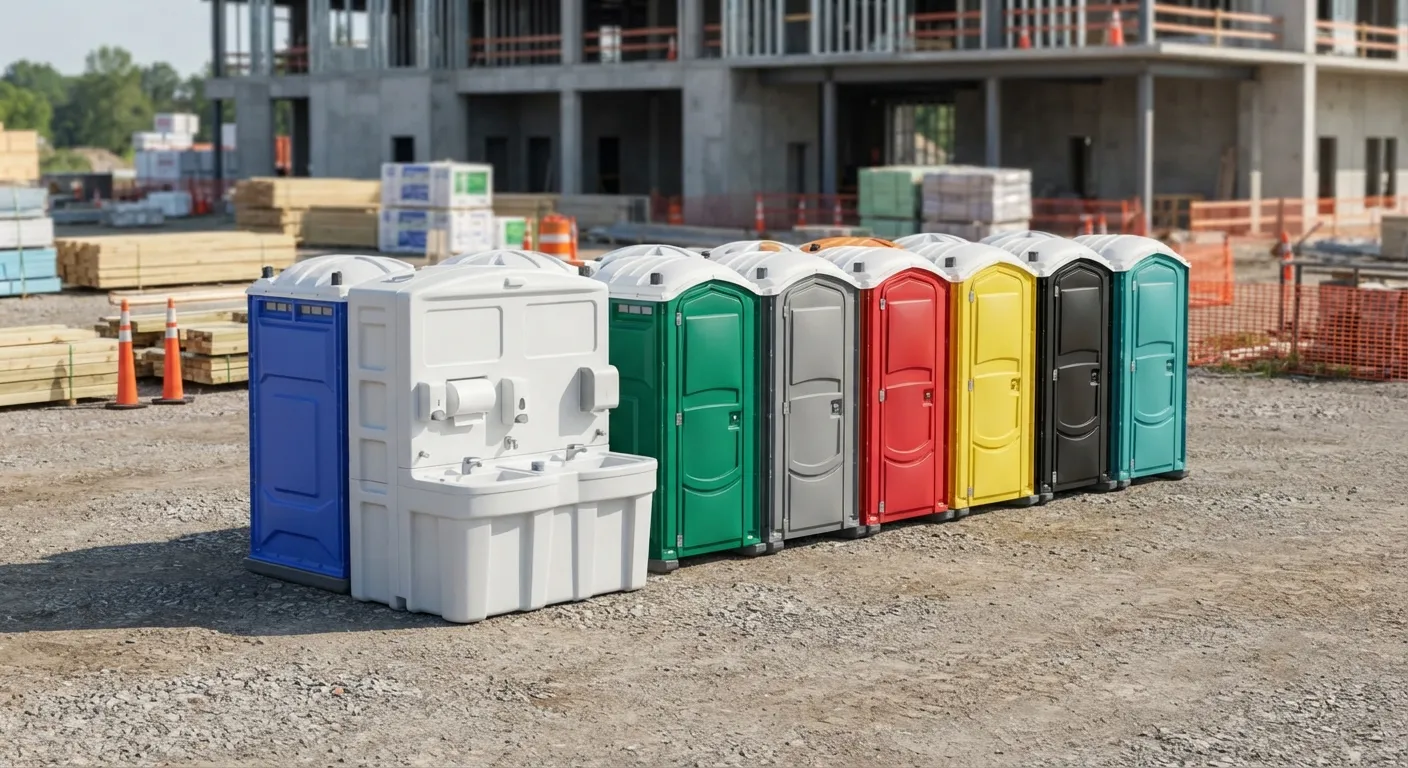
Count workers and walking distance, not acreage. A single standard unit, at 44 by 48 inches on the ground and about 92 inches tall with a 60 to 70 gallon holding tank, covers a small crew working one field. Bigger operations, or crews spread across several parcels around Overland Park, need units placed at each active work zone so nobody walks more than a quarter mile. Use our how many porta potties do I need guide for the math if you run mixed crews or rotate between processing barns and open field work. Seasonal harvest crews that swell for a few weeks often do better on a porta potty rental per day basis rather than committing to a full month, while year-round operations save with a monthly porta potty rental. Livestock operations with a milking parlor or packing shed sometimes need something closer to a job site setup than a field unit; check construction site services or a full portable restroom rental if you are running a fixed facility rather than mobile field crews. Delivery access matters on farm ground too. A roll-off or trailer delivery needs about 60 feet of straight clearance behind the truck, which is easy on an open field but tight in a barnyard with equipment parked everywhere.
Do Farms Need Septic or Grease Service Too?
Most farm operations with a residential structure on the property also carry a septic tank, and those get pumped every 3 to 5 years depending on tank size and household size, a job covered under septic pumping service or septic tank cleaning. If you run a farm stand, dairy processing kitchen or on-site food operation, a grease interceptor gets pumped once fats, oils, grease and solids reach 25 percent of the liquid depth, which is grease trap pumping territory, not septic. Some operations skip septic altogether and run a holding tank rental for a seasonal bunkhouse or workshop instead. If a pipe backs up mid-harvest, emergency septic service exists for exactly that timing problem, and emergency porta potty rental covers the toilet side of the same emergency. Overland Park farm operations near Leawood, 5.7 miles east, or Merriam, 11.1 miles north, use the same service radius our crews already run daily, so a same-day drop is realistic even during planting or harvest crunch. Check current septic tank pumping cost or watch for the signs listed under septic tank warning signs before a small problem becomes a field day lost to a backed-up tank.
| unit | duration | typical price |
|---|---|---|
| standard | week | $200 |
| standard | month | $200 |
| septic | day | $250 |
| service_fee | week | $60 |
Full pricing detail, including delivery fees, lives on porta potty rental cost.
How far in advance should I book for harvest season?
Book as soon as you know your crew size and start date. Harvest crews spike demand fast, and Overland Park operators competing for the same trucks and units in a tight window means late calls sometimes wait. A request a quote two to three weeks out gives us room to route delivery efficiently.
Can one unit serve two adjacent fields?
Only if both fields fall within the quarter mile walking distance OSHA 1928.110 sets for field sanitation. Measure from the farthest work point, not the field edge. If either field pushes past that quarter mile, you need a second unit rather than relying on one central placement.
Do I need an ADA unit for farm labor?
Not usually, unless the operation is open to the public, like a farm stand or agritourism event. Standard field crews fall under 1928.110's hand-labor rule, not ADA placement standards. If you do host visitors, see ADA accessible porta potty for that separate requirement.
What if my crew works past dark?
Add lighting near the unit and the handwashing station so workers can find both safely. A light tower rental or fixed lighting near the barnyard solves this for extended harvest days without adding much to the setup.
Can I combine a dumpster with my farm sanitation order?
Yes. Crews clearing fence lines, old outbuildings or seasonal debris often add a roll-off dumpster rental alongside toilet service, and ordering both together simplifies delivery scheduling around the same site visit.
Next step
Get a delivery date
Tell us the address, the dates and the headcount. We size the order and confirm the route.